ABOUT THE BOOK
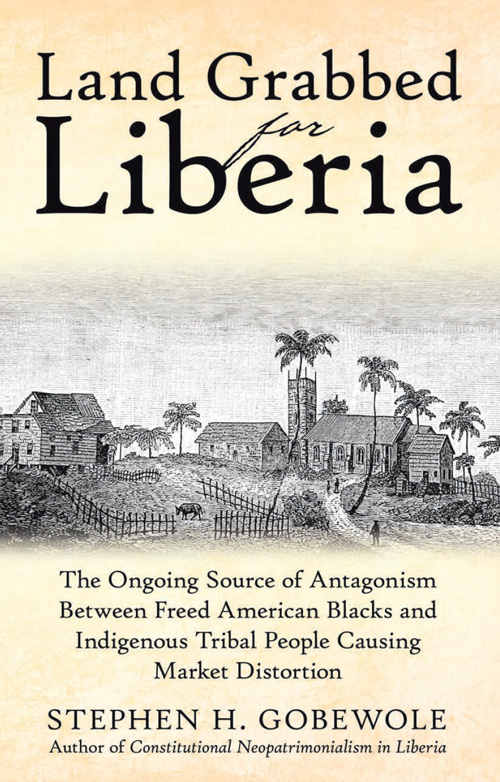
Land Grabbed for Liberia
The Ongoing Source of Antagonism Between Freed American Blacks and Indigenous Tribal People Causing Market Distortion
In the early nineteenth century, freed American Blacks established their own country on the west coast of Africa.
Many were members of organizations such as the American Colonization Society, the Young Men’s Colonization Society of Pennsylvania, the Mississippi State Colonization Society, and the Maryland State Colonization Society.
They named their country Liberia, but liberation came at the expense of tribal communities, notably the Dei, Bassa, Kru, Grebo, and Gola people. Freed Blacks and Americo-Liberians also imposed domestic servitude on tribal people, even selling them into slavery to accumulate wealth.
Stephen H. Gobewole explores how freed American Blacks misled tribal chiefs and why past land transactions were not legitimate. They were inconsistent with the local African tradition and land protocols.
The author also examines how government officials in the United States and slaveholding aristocrats enacted legislation that funded the deportation of freed American Blacks and the consequences of their policies.
Find out how tribal communities in what is now Liberia were decimated, how their way of life changed, and why many remain in poverty to this day with Land Grabbed for Liberia.
OTHER BOOK
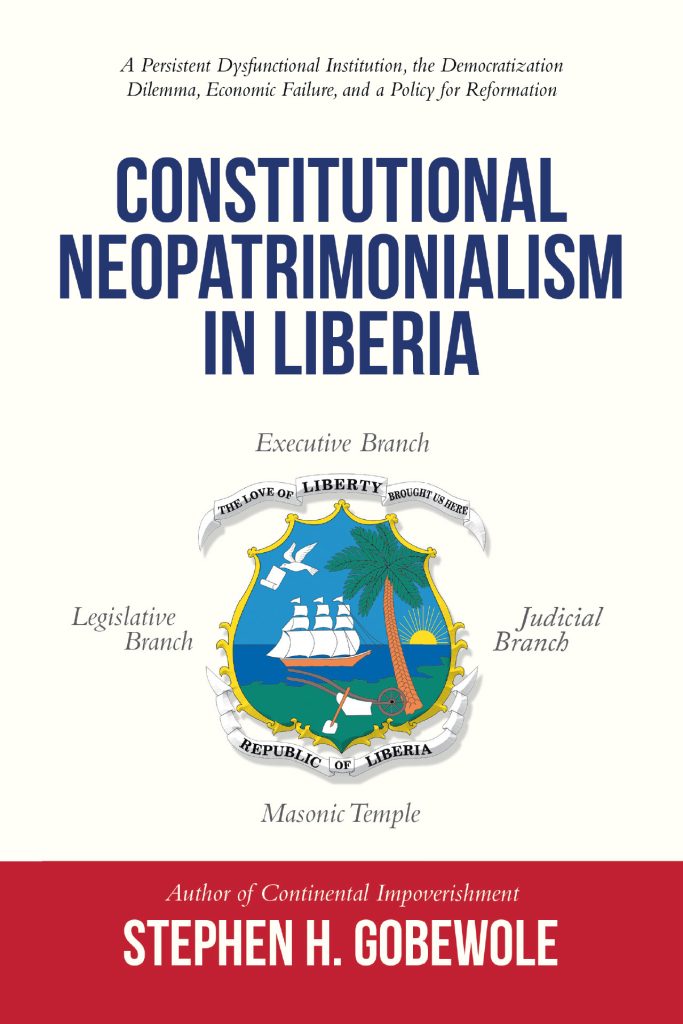
Liberia is a dysfunctional country as the result of its patronage practices, which include nepotism, bribery, and election fraud.
Stephen H. Gobewole, who grew up in Liberia, explains how these corrupt practices have created a dysfunctional institution. He traces the history of the country and answers question such as:
• How have corrupt political practices contributed to the country’s poor economy?
• Why has public corruption been allowed to persist for so long?
• What similarities does Liberia share with other sub-Saharan African countries?
• How have elections been manipulated throughout the years?
Other topics include United States involvement in Liberia, why so many Liberian presidents continue to act unethically, and the country’s civil war.
The book provides empirical evidence, including statistical figures and charts, to demonstrate that the corrupt system in Liberia has led to abject poverty, lower living standards, national instability, and underdevelopment.
Moreover, the author shares public policy proposals that would ease problems, including the effective enforcement of anticorruption regulations.